The Best Trackballs according to Wirecutter

Wirecutter updated its trackballs review today. Their recommendations are basically unchanged, which is no surprise, because the entire trackball market has been stagnant for years.

Despite the lack of evolution in trackballs, I am a huge fan of them. I credit swapping my mouse for a trackball with reducing, to almost nothing, repetitive stress injuries from computing. I find trackballs to be more comfortable to use and more precise than both mice and trackpads. I actually have one for each my my machines (Mac and PC), and bring the smaller one with me when I travel for work.

I can’t quibble with WireCutter’s top pick, but I disagree with their assessment of my main trackball, the Kensington SlimBlade:

Instead of using a hardware scroll ring as on the Kensington Expert Mouse and Orbit with Scroll Ring, with the Kensington SlimBlade Trackball you have to rotate the ball to scroll, which is tough to do without bouncing the cursor around the screen. The SlimBlade’s buttons feel hollow compared with the Expert Mouse’s, and its shiny plastic and metal surfaces attract fingerprints.

Sure, its buttons could be a little clickier, but rotating the ball to scroll without moving the cursor is actually pretty easy. Unlike the Expert Mouse, the SlimBlade doesn’t have an unnecessarily steep angle to it, so you can use it comfortably without a wrist rest. And, honestly, saying its “surfaces attract fingerprints” is just plain stupid. My iPad Pro screen, which is the finest screen in my entire house, “attracts fingerprints” too. I think product reviewers need to strike that quibble off their list.

Improving Dropbox-related error messages in SwiftoDo

I’ve done a lot of work rewriting the Dropbox code in SwiftoDo. At this point, any error messages it generates are a now a little less well written—they are more generic—but they will appear more quickly, with greater consistency, and will reappear (as you would expect) each time Dropbox is accessed until the problem is fixed. Plus, the new error messages will provide a little more information about what went wrong than they did before. I hope it’s the right tradeoff.

🎵 Okkervil River’s back catalog

Listening to Okkervil River’s new album, In the Rainbow Rain, today gave me an excuse to dive, once again, into their back catalog. I am a huge fan of the band’s 2005-2008 work, a trifecta of literate rock albums: Black Sheep Boy, The Stand Ins, and The Stage Names. Each of these albums is a staggering artistic achievement; each song on them is an evocative short story with enough weight, depth, and maturity to reward repeated listenings.

I haven’t spent nearly as many hours listening to their work since then, which which includes The Silver Gymnasium and Away. This, more recent, period is characterized by a darker, more somber tone. It’s easy to imagine the band’s frontman, and only consistent member now, Will Sheff, slowing down, looking back on life, and looking far forward to his eventual death. That’s way heavier stuff than what I normally listen to, but not too heavy to be enjoyable.

Trying to get back into Pinboard, or, maybe I am over-complicating things

I am trying to get back into Pinboard, the reliable and, a few years ago, faddish, “antisocial” bookmarking service.

I had been using it as an archive of my old browser bookmarks, and as a “read it later” service to push articles to from Twitter and my RSS reader. I used to use it pretty consistently, with the help of an iOS app and a Chrome plugin for my Mac. When I went on an RSS and Twitter diet late last year, though, I kicked my Pinboard app off my phone as well. More recently, I wiped my Mac clean and reinstalled a bare minimum of apps and services, which did not include Chrome or the whatever Pinboard plugin I had been using with Safari. Since then, Safari and Google have been my bookmarking service, in that I don’t actually save any bookmarks, but rely on typing URLs or searches directly into the browser address bar most of the time.

Recently, in part because iOS supports it in the long-press menu on every URL, I have been saving links to Apple’s built-in Safari Reading List. Saving bookmarks is as low-friction as can be, but reading them is, paradoxically, very high friction for me. I never think to dig into the second panel within Safari’s bookmarks to look for something to read. Consequently, my Safari Reading List has become a graveyard for links that I (think I) want to read but probably never will. Maybe that’s what is is actually for, and maybe that’s what I actually need.

For fun, though, I’m going to try to use Pinboard more instead.

Micro Monday: Follow @matigo. He’s a lot like me, but lives halfway across the world (in Japan as opposed to New Jersey). He posts and replies to posts frequently, and is a great member of the Micro.blog community.

Robocalls Flooding Your Cellphone? Here’s How to Stop Them

This article inspired me to install Hiya on my iPhone to block spam calls. I will find out eventually how well it works. I get 5-10 robocalls per week, mostly from the same exchange as my mobile number or my Google Voice number.

It seems to rely on a central service for all blocking rules, including an optional whitelist for your contacts and an optional rule based on your phone number for “neighbor” spam. It can identify and block a gigantic list of known spammers and robocallers, which is beyond what I need.

Having looked at it, and its competition, it seems like there isn’t a good on-device-only call blocker for the super-privacy conscious who, like me, only want to whitelist contacts and blacklist all other numbers in a couple of area codes and exchanges. I really want to write one. It would have to be free, I think, based on the free competition out there—but it may fit a particular niche that is out there.

Google Plus still exists. Why?

I haven’t thought about this in a long time, but I am actually surprised that Google Plus still exists. Considering how many products Google launches and kills each year for practically no reason, it’s astounding that one of its monumental flops has been allowed to limp along for so many years. I think it must still be around because either it still generates signals for Google (how many though, compared to other things?), or because it was tied in, at a technical level, to more valuable and integral services like Gmail. All I know is that its continued presence in the Google portfolio serves as yet another reminder to me about how unfocused Google is as an organization.

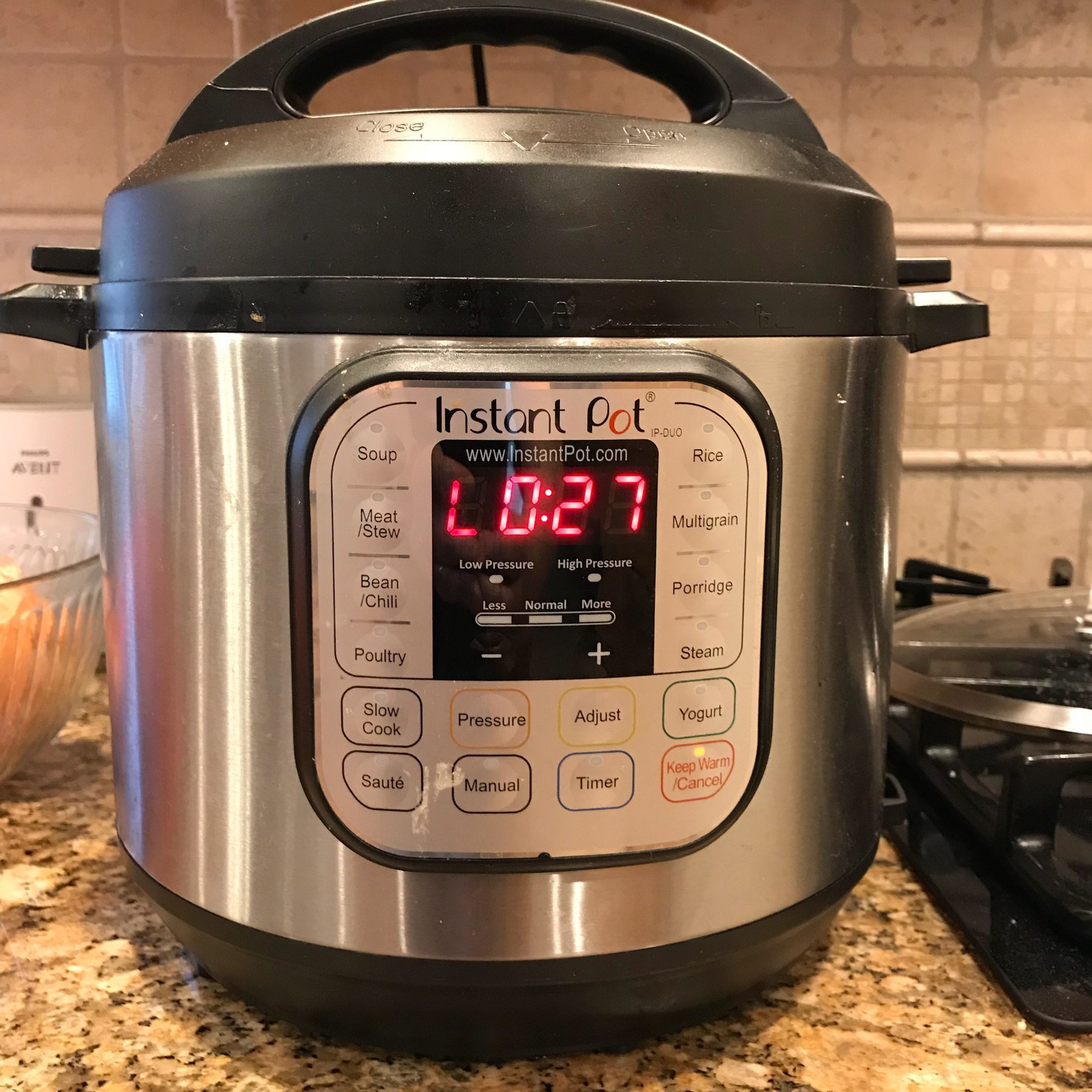
I’m making 12-bean soup today, in an effort to get back to eating home-cooked, wholesome foods. Every few months, as work and family commitments change, my family gets off track. Hopefully we can right the ship now that is is spring.

My 300th post on Micro.blog

According to my Account page, this is my 300th post on Micro.blog. I thought I would share some stats:

  • Micro.blog posts: 300
  • Days on the platform: 136 (joined 2017-12-19)
  • Average posts per day: 2.2
  • How many people I follow: 131
  • How many people follow me: I have no idea, and that is fine
  • How much engagement I get from other users: a pleasingly good amount
  • How much I happily paid Manton for Micro.blog hosting thus far: $30 USD ($5/month, not including the free trial period)
  • How little I could have paid, if I wanted: $0 for a WordPress.com blog or $1/month for an inexpensive WordPress host, plus the free Micro.blog account

Micro.blog has gotten me into blogging again after a long time away from it. I enjoy owning my own content, the focus on writing rather than liking or retweeting, and, most of all, the lack of friction in the platform. Posting short or long form content is as simple as can be, and I don’t have a WordPress install and/or server to maintain.

I am having fun on the platform and look forward to continuing to do so.

Google News is getting more video

Google News is getting a revamp with more video and faster load times - The Verge

Google is giving Google News a redesign that will bring in elements from its Newsstand app and YouTube, according to sources who spoke with AdAge.

More video? Gee, no thanks! Maybe I should give Apple News a try again…

🎵 Groundhog Day the Musical

Groundhog Day is my second favorite Broadway musical of last year (closely behind “Dear Evan Hansen”, which has more plot-related problems but really terrific music), and the only one I saw. I revisit the cast album from time to time, because it is terrific, and multiple listens reveal hidden depth in the earthy lyrics.

Broadway World’s review of the cast album is remarkably spot on.

On first listen, Minchin’s melodies are captivating. They are undeniably more poppy than his dark, moody, and undulating score for MATILDA; however, it’s obvious that he has written each of these compositions with the same consideration and care that he did with MATILDA. Despite the more simplistic sounding and pop aural soundscape, the melodies are intricately layered showing an artistry and skill that is not apparent in one listening.

I hope Tim Minchin keeps writing musicals. His music and lyrics for his prior show, Matilda, are a masterpiece. (Listen to the London cast recording over the Broadway one if you can; it is a far better performance, though it is missing some of Matilda’s monologues.) “Groundhog Day” doesn’t quite rank as a masterpiece in my book, but it is really, really good.

Listening to Podcasts without Voice Boost

I am so accustomed to listening to Podcasts with Overcast’s “Voice Boost” feature that, when I turn it off (as I’m doing today, because my Bluetooth headphones are too loud) my podcasts sound flat and lifeless.

I wonder, though, why more podcast producers don’t run their episodes through dynamic compression and EQ filters (“Voice Boost”) prior to publishing. For that matter, why don’t they “shorten silences” on their end, too? That way, everyone could benefit from better audio quality and a shorter runtime. I suspect that some of big, radio-show-based podcasts do, but it’s obvious that most other podcasts don’t.

The 2017 Panic Report

The annual Panic Report is always worth a read. I use a lot of their apps, and have long considered them an app studio so talented that I will buy whatever they make, so long as I can sometimes use it. They are refreshingly open and honest about their business, too. Their annual reports are especially eye opening if you are a developer and are curious about the business aspects of the App Store.

I thought this part, toward the end, was kind of funny.

⑨ I’m using Transmit 5 as my primary interface to Dropbox. Am I a bad person? —Kyle

Absolutely not. This is so potentially powerful, we even made a video about it!

I don’t install Dropbox on my Mac anymore. Instead, I now use iCloud Drive for cross-device sync. I use Transmit 5 to get to Dropbox, the few times I need it. It seems weird to do so at first, but it is much lighter on resources, if you don’t need file sync.

Note to past self:

Remind me again why you decided to rewrite, yet again, the Dropbox-related code in your app? You know, the code that you may just get rid of completely a few months from now?

Sincerely, 🤯

I didn’t know about this action to post directly from Drafts 5 to micro.blog, with or without a title, until today. It’s a game-changer for me.

Post to Micro.blog (with Title) - Drafts Action Directory

Two of the best platformers I’ve played on iOS are getting their due today from Apple

Today, Apple’s US App Store is highlighting two great games that are among the best on the platform:

  • Game of the Day: Goblin Sword. Goblin Sword plays like a AAA title from the 16-bit days, and has great play control, difficulty, and variety. It’s fantastic.
  • Games Are Art: The Beauty of Oddmar. I learned about Oddmar from someone else on micro.blog, and have only played through a handful of levels. The play controls are unique and well suited for the iPhone, and the graphics and sound are amazing. It’s a fun and funny game.

Remote login Inception

At work, our clients are far more interested in information security than they used to be. That’s great, and I applaud them for it. Of course, as a user of their systems, there is a trade-off in terms of convenience.

Lately, logging into remote systems seems like entering a-dream-within-a-dream-within-a-dream—a la Inception. Instead of merely using Remote Desktop to log into systems with a single username/password, we now follow in-depth login procedures using virtualization software, RSA tokens that generate unique, one-time passwords, Remote Desktop logins, and systems logins.

Who cares about Apple earnings reports?

Do Windows fans care about Microsoft’s earnings? Do Android fans care about Google’s? I wonder if the main reason Apple fans (non-investors) cheer on Apple’s good earnings reports is that Apple almost went out of business in the 1990s. Unless the company is going out of business, or if you have tied a lot of your money up with them somehow, who cares about its quarterly earnings report?

📚 Ready Player One, by Ernest Cline

Earlier this year, I completed reading Ready Player One by Ernest Cline. It was the first novel that I had read in a while, as I have been reading mostly nonfiction in recent years. I discovered the book from an episode of the “Triangulation” podcast in which Leo Laporte interviewed author Andy Weir, who enthusiastically recommended the book.

Overall, I enjoyed the book. The prose is efficient and the pacing is swift. I thought it started out strong, and I liked the world building and the build-up of suspense in the early chapters. After a while, though, I tired of all the 1980s video game and movie references, and wanted the book to end. While I was about three quarters through the book, I referred to it as “the reading equivalent to watching somebody else play video games”. For me, the stakes felt too low, and the characterizations were too thin, to make a lasting impression. Still, I had fun reading it, at least most of the way through.

The best part of working from home is the ability to take a nice walk after lunch. Spring weather was finally here at lunchtime, and I thoroughly enjoyed it. Summer temperatures will follow by dinner time and last for the foreseeable future. So, that was spring!

I quit my iPhone for a basic Nokia and it was hard but worth it

This article on Quartz about limiting smartphone use is both sublime and ridiculous.

I want to be present. Is that so much to ask for? Is that so odd to crave in this day and age?

Maybe you’re reading this thinking I’m taking it too far and being ridiculous. That it’s just a smartphone, people check them all the time and that’s just the way it is and I should get over it and get used to it. But being on it most of my free time feels wrong on every level. I don’t want to get used to it anymore. It shouldn’t be this hard to reduce the amount of time I spend looking at this damn screen instead of being with my own thoughts. It shouldn’t be this challenging. But it is. And that says tons.

A few years ago I wanted to do the same thing this author does—downgrade from smartphone to dumbphone—but to save money rather than to improve my contact with the outside world. My plan was to replace the smartphone with an iPad Mini, which I would use only on WiFi. Back then I shuttled every article I read from my RSS app (Reeder) to my read-it-later app (Pocket) and cached them offline, so I would rarely be without an offline time waster, to fill in those dull times in waiting rooms or on trains. I didn’t go through with the plan, though. I got caught up in smartphone fever along with everyone else in my office. It was an exciting time in the development of that technology—much more exciting than today.

I think it is interesting and admirable to try to limit your smartphone use, and it is fun to read about someone’s experience with it. I also think that this essay is the sort of thing my grandchildren will read in history class, perhaps on the whatever slab of glass and silicon they carry, and laugh at how silly we were to distrust the most transformative technology of our time.

Premature Optimization

In programming, there has long been a warning in computer science to avoid premature optimization. Donald Knuth called it “the root of all evil”. I find myself thinking about this all the time—not so much while programming, but when I’m thinking of spending money on myself, or telling people how to spend their money on me, as for birthday or Father’s Day gifts.

I’m at an age now where I have everything I would ever want. But…everything I have could still be a little bit better. To wit:

  • I have awesome headphones that I love. I want better ones. And different ones.
  • I have a home server that is underpowered, but quiet and extremely reliable. I would love one with enough power to could run virtual machines, but I don’t really need it.
  • I have a clicky mechanical keyboard that I love. I want a better one—that lights up, unnecessarily, or has colorful keycaps.
  • I have an Apple wireless keyboard for my Mac. I want to replace it with the Apple Magic keyboard, even though I already have an Apple Magic keyboard for my iPad.
  • I have a Series 1 Apple Watch that I love. I would love, even more, a Faster Series 3.
  • Let’s not even talk about iPads and Macs.

These few things are some of my material obsessions. What they have in common, for me, is that they have all been satisfied by things I already own, upgrading to newer or better versions would cost a lot of money (way more than anyone would spend in a gift for me), and the upgrade would be only marginally better than what I have, so I’m not sure if it would even make me happy.

Despite knowing all this, I can’t stop thinking about upgrading what I have to something better. I always want to optimize my experience with the things I enjoy. But, until the things I have break down and are no longer useful, it is too early to upgrade them. Doing so would be indulging in premature optimization, which be wasteful, which is “the root of all evil” to me.

Someday, my headphones will break, my keyboards won’t be compatible with my computers, my server won’t support the OS I want to run, and Apple won’t support my hardware anymore. That’s when I will upgrade these things—after I have extracted every bit of their value. Until then, I will just daydream about, and feel a little guilty about obsessing about, premature optimization.

Introducing The New Yorker Crossword Puzzle

The New Yorker just launched a crossword puzzle.

Most of our readers have e-mail addresses now, and the Web has given us the space to try new things—and to try old things again. In that spirit, we’re launching another crossword, online this time, and in the American style. It’ll be weekly, just like the magazine: a new one every Monday morning

I am a daily crossword puzzle player. I enjoy them, though I am not terribly good at them, because I love word games and have read that crosswords help keep your mind sharp into old age.

The New Yorker puzzle is a tiny bit more challenging than I would like (as I said, I’m not a strong player), but I’m happy there’s another source of crossword puzzles (beyond the New York Times, which I also subscribe to) coming my way.

I hope they will someday move it into their iOS app. The scrolling behavior, which affects the on-page keyboard, is annoying on mobile.

Prolific Apple supply chain analyst Ming-Chi Kuo departs KGI Securities, likely to focus on companies other than Apple

Kuo’s departure comes hot off the heels of Apple’s recent “leaked” memo about leaking that threatened the leaky leaders who leak.

Why has Ming-Chi Kuo, arguably one of the most popular technology analysts in the world, decided to move on? One possible reason is that his sources have done likewise, or perhaps have even been removed in light of Apple’s recent memo and strong stance against leaks — supply chain or otherwise.

I wondered why myself, and figured that Apple has either threatened him, or his sources, with criminal lawsuits. I, for one, wouldn’t mind if Apple finally closed up all the leaks in its supply chain. While these leaks may benefit Apple investors, they don’t really benefit Apple fans that much.

My slide into audiophile territory, Part 3

This is the third in a series of posts about my realization that I have become an audiophile. The prior post examined what it means to me to be an audiophile.

It’s about spending money, right?

Calling yourself an audiophile is a little like calling yourself a rube and not realizing it. That’s because being an audiophile is a hobby marked far more by spending large amounts of money on speakers (I include headphones here, of course)—speakers that sound only a tiny bit better than much less expensive speakers, than on anything else. At worst, it’s conspicuous consumption wrapped in a superiority complex, or an obsession that has gotten embarrassingly expensive. At best, however, it’s about finding new ways to enjoy the music you love, enjoying that music an awful lot with the equipment you have, while keeping a level head about your budget and equipment’s price-to-performance ratio.

I, of course, include myself in the latter camp. I’ve spent a good amount of money on headphones at this point, but I am mostly interested in extracting as much value out of them—as many listening hours and as much enjoyment as possible—rather than on what the next better set of headphones will be.

But why spend a lot more money on a tiny improvement in sound quality?

I care an awful lot about music. I’ve found, quite accidentally, that there is more detail to be heard in the recordings I love, provided I have better speakers or headphones to listen to them with.

I never thought I was missing anything when I listened to everything through $10 Sony earbuds that I would have to replace every three months or so. When I got my first pair of over-ear headphones, though, it opened a new world for me. I heard details in the music I had never noticed before. The soundstage sounded wider. Instruments sounded more distinct, realistic, and separate from each other than I had ever heard before. Drumbeats had a more visceral impact, due to headphone drivers being much larger than those I was used to. On a more basic level, the over-ear headphones had better isolation than the earbuds did, blocking out outside noise, allowing me hear my music even better. Listening to music, something I loved already, became more fun and more exciting than ever before.

Those first over-ear headphones, which I credit for opening my eyes to the benefits of higher-end gear, were nothing special. They were a SteelSeries 7H gaming headset, which I received for free in exchange for writing a review. At the time, it was a $130 headset; today they are being sold for $21, proving that you don’t have to spend outrageous amounts of money to get better audio quality. I’m not saying they are the best headphone ever. Compared to Apple and Sony earbuds, though, they sound fantastic. I never would have realized it, if I hadn’t picked them up.

The headphones I’m wearing right now cost a lot more than those SteelSeries cans, and they reveal details in the music that the SteelSeries cannot. They are objectively better. But the much cheaper headphones are still just fine, and sound way better than whatever free pack-ins you got with your smartphone. I enjoyed them and would probably still be using them to this day if they had not broken. (Headphone durability is a separate issue from sound quality, and can be worth spending more money on.)

The jump from $10 headphones to $130 headphones was definitely worth it to me. Each jump up in price I have made since then was worth it, too. (I didn’t get all my headphones for free!) If I hadn’t tried headphones better than the ones I was used to, I never would have known that better sound was even possible.

What about the law of diminishing marginal returns?

After a certain dollar amount, each additional dollar spent on audio equipment buys you less and less of an improvement in quality. This is the law of diminishing marginal returns, and it’s a very real thing.

Audiophiles can spend stupid amounts of money on headphones and speakers. (To me, the “stupid” threshold is over $400; it may be way higher or way lower to you.) Some headphones cost well over a thousand dollars. Still other models, designed, I think, for for people with more money than sense, retail for three thousand dollars or more. Some speakers cost tens of thousands of dollars. In addition, some people spend hundreds or thousands on receivers, amps, DACs, and whatever other signal processing they want to use to drive their headphones or speakers. The audiophile hobby can get extremely expensive, if you have the money and are never satisfied with what you have. It doesn’t have to be, though.

In my opinion, you have to stop spending money on audio equipment at some point. If you are never satisfied with what you have, the problem may be something other than not having spent enough to buy decent hardware. You can still be an audiophile without buying new equipment all the time or going broke (or merely being ripped off) on over-expensive gear. It’s about the love of the game—the love of music and the gear it plays on—not the love of spending or the fear of missing out on an even better thing.